Sunday, March 29, 2026

Mahabaleshwar Jaoli Trek - Raireshwar - Koleshwar - Jor Village - Bahirichi Ghumti - Dhawale Ghat - Dhawale Village - 24-25-26 Jan 2026

After a long time I was at Mumbai Central. I use to travel from Thane to Mumbai for 2 years during my MBA course at BGIMS. The railway station is somewhat same which it used to be 15 years back, only I could see a airport type lounge added to the outstation section, other than that it was all same. But as soon as I got out of the station and started to move towards the Central Bus stand, the whole area has got an upgrade, rather you can say as an upgrade in progress. The newly built underground metro passes between the Mum Central railway station and the Bus stand, the whole top area has been widened to double the size of what it used to earlier. Other than that the same old Railway station and same old bus stand. I was suppose to catch Mumbai - Wai ST Bus at 00:15 AM to reach Wai by morning 5 AM, then reach Raireshwar by locally arranged transport, then start walk to Koleshwar plateau and then descend to Jor village from there which was the first night stay stop. That was the plan and glad we could execute it, but with some hiccups.

 As soon as I entered the bus stand, I could sense the anxiety of travellers who had came to board their respective ST buses to reach their respective destinations all over Western Maharashtra. Some had reserved their seat and were anxious about the arrival of their buses, some had not reserved and were anxious if they could get seats for the long journey. Overall the bus depot was buzzing at 11 PM in night on 23rd Jan 2026 more than usual, as following three days were holiday and everybody had to go somewhere. When I reached the Depot I had got 1 hour 15 mins for the Wai bus arrival, so I located an empty seat and rested myself. The seats at the depot are very funny, they are of stainless steel which don't allow to sit still, you place yourself upright and in 2 mins you slips downwards on the seat, then again you have to make yourself upright. 

 One of my co-trekker and friend Mahesh Gawasane arrived at 11.30 PM and we both were suppose to board the bus at Mumbai central bus depot and other 9 members from Kharghar. As our tickets were booked from Mumbai Central, someone had to come from the origin to inform that most of our team members were boarding from Kharghar, so that the conductor remain inform and doesn't skip Kharghar. Our bus arrived at platform no. 8 of the depot 15 mins before the time. Our seats were reserved so we didn't rush, but some of the unreserved travelers were desperate to find seats. After two of us entered the bus, we announced our reserved seats which were all in left side of the bus, so no one sits on them and later claim to be theirs. Mahesh informed the conductor about the Kharghar boarding and the bus started from Mumbai central on time. The bus when reached Kharghar at 1.45 AM was already late by 1 hour due to traffic and our kind hearted conductor who was calling each and every reserved passenger and waiting for them to board the bus. Around 2 AM in night, the bus with 11 of us and 22 more passenger left Mumbai and plied on the Mum-Pune expressway. While leaving Mumbai central, the driver had announced that there is heavy traffic in Lonavala ghat, which had bulged till we reached the first toll naka at Khopoli. Immediately 5 mins after toll naka, the traffic started and the ordeal got over after 2 hours. While all others in the bus napped during these two hours, only two people were awake. Myself and the Bus driver, Bus driver was awake for obvious reasons and I was awake thinking if we reach Wai late, then will we be able to complete our first day plan in time. Our plan was to do the first day without any guide, as I had seen all the videos on YouTube of the route and downloaded offline GPX maps of the route. But if we reached late there was no room for error or losing the route, coz we may not have time to recover and we may have to spend our night in the forest. I made calculations and different possibilities in my mind. As the bus left Pune city around 6.30 AM, Wai was still around 2 - 2.5 hours away. I discussed the plan with Mahesh and he agreed that we may have to cancel our original plan of Day 1 and reach the Jor village directly by local transport which was earlier posed to drop us at Raireshwar. After reaching Jor village, we may go up to old Mahabaleshwar and come back to Jor village for continuing the Day 2. While I was not happy that we had to cancel the original plan of Day 1, but the late arrival of ST bus in Wai foiled all the plans. After discussing the Mahesh, I explained the plan to the whole team, to which one of the member Sandip Nikam said that if we reach Raireshwar by 11.00-11.30 AM and if we get a guide, then trek route can be completed safely and in time. Even if get into the dark hours of evening, then with help of guide we can find our way to Jor Village as all the members had torch. The plan sounded good, but I was skeptical as in how we shall get a guide at last moment. Some phones were dialed, some experience trekkers were contacted and finally we arranged a guide after trying for a considerable period of time. This guide was Sandip Jangam of Raireshwar Camps on top of Raireshwar, who has camping set up on Raireshwar just before the main temple and also arranges for food for the tourist and trekkers who come up on the plateau. 

 We reached Wai around 9.15 AM, the whole group got fresh on the ST stand itself in the public toilet, then we completed the breakfast in nearby hotel and called our pre-arranged vehicle to take us to Raireshwar. We had particulary asked for a 10-11 seater vehicle with carrier on top as all of our members had heavy rucksacks for the 3 days trek. The driver brought Mahindra Maxx with carrier on top and we left Wai around 10:00 AM to reach Raireshwar parking lot at 11:00 AM. The whole journey from Wai to Raireshwar is very scenic, first going besides the Dhom dam and then climbing up on the ghat adjacent to Kenjalgad. We loaded our back with heavy rucksacks and started climbing the big ladder after the parking lot. Within 10 mins we were on the beautiful plateau of Raireshwar and well paved path took us to the Raireshwar temple, where Chattrapati Shivaji Maharaj took first oath of Swarajya. On the way we picked up our guide Sandip Jangam and he asked to wait for him near the temple. Once at the temple, we took darshan of the Shivling and got ready for the trek. Took a group photo and started to walk behind the guide in a single file. 

Raireshwar is a big plateau with the west end called Nakhind and is of historical importance. We started walking towards West towards the opening of Nisanichi Vaat. On the way, our guide Sandip showed us a shrub which he said if we accidentally eat then all our teeth fall. Even if this was not true, no one dared to even touch that shrub, what a tragedy it would be to lose all your 32 teeths. Further we took left to the south direction and in 5 mins came across an opening in valley and a steep way going down between the rocks. The Nisanichi vaat initial 10-15 mins route is very steep and the slippery dry grass adds to the thrill. We carefully negotiated the initial 40 feet rock section slowly and taking care that rocks don't slip and fall on our team members walking below. The huge south facing wall of Raireshwar was looking intimidating and we could see the whole area between west end of Koleshwar and Raireshwar plateau, which further ends at Kamthe and Dhawale valley. Next 15 mins was total patch of slippery dry grass, sometimes you think slippery soil is better than this. As these routes are only done by experienced trekkers, the route was totally engulfed with grass and without any navigation or guide help it would be difficult to find the route. We could see the Jambhali village below right from the time we started to descend Nisanichi Vaat. Jambhali Village was well situated between Raireshwar and Koleshwar with a beautiful dam to add to the picturesque view. Starting Descend from Raireshwar, in 1 hour we were down at Jambhali Village, refilled our bottles and resolve and started our climb to Koleshwar via Raikanachi Vaat.

The Sun was making its existence clear as we left the Jambhali village, walking towards south we crossed the dam wall and the path merged on the north eastern face of Koleshwar. The initial 20 mins walk was soothing and we were moving in the dense forest of Jaoli, but further the route started to climb on the long arm of the mountain, exposing us directly to the afternoon sun and sapping our energies. Sometimes criss cross and sometimes straight up on chest the route was trying to extract best of us. The heavy backpacks on our back and shoulders was pulling us down and we were acting against gravity with our quads, calfs and glutes pumping at its best. At many places, the soil on the route was loose, but it didn't matter much as we were climbing. After climbing the long arm we came on plateau just below the main mountain, we took a small hydration and food break as all were panting heavily with the ascend. After the break we marched towards the top of Koleshwar plateau and just before we reached the top there are beautiful steps carved between the rock faces which is cynosure of the Koleshwar plateau climb by Raikanachi Vaat. Finding something so beautiful at end of an arduous climb fueled our hearts and made the body ready for 2-3 hours more walk. On the top, we came across a shepherd's house, there was no one in the house at that time. Our guide Sandip Jangam informed us that there are many Gawas (Indian Bison) on the top of Koleshwar plateau, so he requested us that our further walk needs to be silent without any noise. He also asked us to accelerate as it was already 4 PM and we had 3 more hours to walk to our night stay Jor Village. 

Walking flat on the plateau for 15-20 mins amidst dense forest we reached the Koleshwar Mandir, which is a small shivling situated in open with stone boundary walls on three sides. After paying our reverences to the mountain god, we started traversing the plateau in south western direction. The walk was not ending and we were walking for one hour continously amidst dense forest of Jaoli, still we were not able to see any opening to the Jor valley between Koleshwar and Mahabaleshwar. The forest on Koleshwar is different kind and you feel the difference when you are walking on the plateau. It is a very scary place to get stuck if you lose the way or if it gets dark. That is the precise reason why we planned to take a guide, because without a guide it was not possible to cut this kind of distance in a short time. But the dense untouched forest of Koleshwar is the kind of nature everybody shall experience once in life. Even if you have trekked long in Sahyadris, you have to once come to Koleshwar and experience real Jaoli. We kept walking and by 5.30 PM, we were traversing the southern face of Koleshwar and down below we were able to see the Jor village (our night stay) and right in front of us the touristy Mahabaleshwar plateau. We started to descend the route called Betkavnyachi vaat to the Jor village. The southern long arm of Koleshwar plateau was dropping to Jor, the route was covered with loose soil and dry grass. All along the way we had not taken a proper food break till now. The sun was getting ready to set on the Bahiri Ghumti side and the village was getting well within our range. We took a food and snacks break on the steep slope of the arm as there was no flat space to sit anywhere. Descending further we arrived at Jor village, just before the night could set in. It was a tiring day as we had covered a long route in 6 hours, which generally take 10-12 hours for other trekkers. We bid goodbye to our guide Sandip and hopped onto our night stay. Our host Balu Kadam had great sense of humour, his family welcomed us in their typical village house and we relished tasty food after a toiling day.

Morning on the second day we woke up at Sunrise and completed our morning chores . Had a hearty breakfast of Poha and Chai, packed our bags and the group was ready for the grinding on day two. The plan was to start walking towards west in direction of Bahirichi Ghumti, reach Bahiri and descend down to Dhawale village via Chandragad fort in between. It was a long descend, being done the same in 2016. By getting initial directions from our host, we started walking at 8 AM along the stream in single file. We chose to not take guide as we had gpx file of the route and after reaching Bahiri, it was straightforward route down, without any confusion. Keeping the Mahabaleshwar mountain on the left, we kept walking for almost an hour along the stream. The stream was mostly dry in patches and at some places water was present at intervals. After initial flat walk the route entered into dense forest making the walk very pleasant in the morning sun. The sunrays cutting through the dense vegetation made a special effect on the water patches of the stream. The forest was alive with birds chirping happily and it was a scene just out of a story book. 

Walking around 2.5 hours from Jor Village, we reached Bahirichi Ghumti around 10:30 AM. Bahirichi Ghumti is an important junction on this route. The stone idol of Bahiri devi (mountain goddess) calmly rest on the rock at its back facing south towards the Mahabaleshwar plateau. With your back at the idol, if you walk 14-15 steps, there is opening in the forest on left side, climb from that point takes you to Arthur Seat Point of Mahabaleshwar and if you walk straight then the descend to Dhawale village starts. We had to fill our bottles as there was no water till the descend down to Dhavale village. There is a source of water only 5 mins away from Bahirichi ghumati in Arthur seat direction. There is a water tank carved in the mountain, which carries the most cleanest and coolest water you can ever imagine.

The views from Bahirichi ghumati are jaw dropping, the humongous landscape and rugged layers of Sahyadri make a show you cannot imagine even in wildest of your dreams. Bahirichi Ghumati resides on a edge of the cliff and on the western side it is sheer drop of 2000 feet. You can see Chandragad below in 7 o clock direction and further on the landscape you are able to see Mangalgad. The topography is so difficult that any person standing at Bahiri will wonder 'how its even possible to get down this mountain, where is the way'.  We started descending the Dhawale ghat at 11.15 AM. The first 30 minutes are bit scary as you are literally traversing south western direction on the edge with rock face on your left and vertical drop at your right. Most importantly the edge is enough only for your two feet to stand. We decided to stick with each other to negotiate this difficult patch. There was loose soil and fallen karvi trees in between, which made the traverse difficult. Further the route take right towards north on the shorter arm of the mountain, which is steep descend. The sharp elevation drop was making us slow as there were many patches of loose soil and stones. At some patches we had to take support of the karvi bushes and trees besides the trail to avoid losing our balance. Many of us slipped, fell on our bum, picked ourselves up and kept going on. The physical punishment was real and the previous day grind was adding to the effort.

Around 2 PM, we could get out of the exposure and entered the dense jungle below. Still the descent was not ending and we were now moving with a dry stream on our right. This stream is said to be origin of Savitri river, which comes down from Mahabaleshwar to Mahad and opens in the sea at Bagmandla-Bankot estuary. We had a half n hour food and hydration break in the forest on the slope, everybody was exhausted with the steep descend and the afternoon heat and there was question on everybody's face 'how much more?'.  The heavy backpack and the humidity inside the jungle was draining our energy faster than expected. Our night stay host at Dhawale village had told us that there is a shortcut which cuts left from the main route to Dhawale village and directly climbs to Chandragad. He said he had kept a steel diya at the point on left side, where we were suppose to take left and climb Chandragad. We were continuously walking through jungle in North Direction and it was already 5 PM, everybody was exhausted from the two days grind, so we dropped the plan of going on Chandragad and continued our walk towards Dhawale village. The trail take a full U pin bend left side on the northern ridge of Chandragad and arrives at Dhawale Village. The dry Stream of Savitri river was with us all along for last 4-5 hours and we were wondering if we could get a cool dip in some of its water ponds which were surviving till end January.  At 6.30 PM we reached Dhawale village and retired for the night on the local school corridor.

Next morning, we got first ST Bus to Poladpur, which had came to the village in night. From Poladpur we immediately got a bus to Mahad, where we negotiated hard with an EECO driver and before 1 PM we were at Panvel. Reflecting back these last two days were overall satisfying. The dense forest of Jaoli demanded the best from us and we gave it back to a certain extent.


Raireshwar Plateau Way to the Mandir 


Nisanichi Vaat Desend from Raireshwar 

Nisanichi Vaat Descend from Raireshwar 

 
Jambhali Village Dam - Enroute to Koleshwar 

 
Jambhali Village Dam 

 
Raireshwar Plateau 
 
 
Koleshwar plateau Entry - Rock Cut steps 


View from Bahirichi Ghumati 

Unbelievable Koleshwar Plateau Jungle 


Descend on the Edge - From Bahirichi Ghumati to Dhawale 

At Jor Village - Ready for Day 2 

View while Descending Dhawale Ghat 

Group at Raireshwar Mandir 

Group descending Nisanichi Vaat from Raireshwar 

Nisanichi Vaat Descend 

At Jor Village with our Host Balu Kadam 

 Filling water bottles at the Water tank near Bahirichi Ghumati 


GPX files: 1) https://drive.google.com/file/d/1_2tWNZVqcaE8KCUvZttrkRApzr2Iwent/view?usp=drive_link
2) https://drive.google.com/file/d/1m1YL99kusPdy_jYM0VQBLFBICV7Glo1w/view?usp=drive_link
 
 
xxxxxxxxx-------------xxxxxxxxxx------------xxxxxxxxxxx 

Wednesday, December 18, 2024

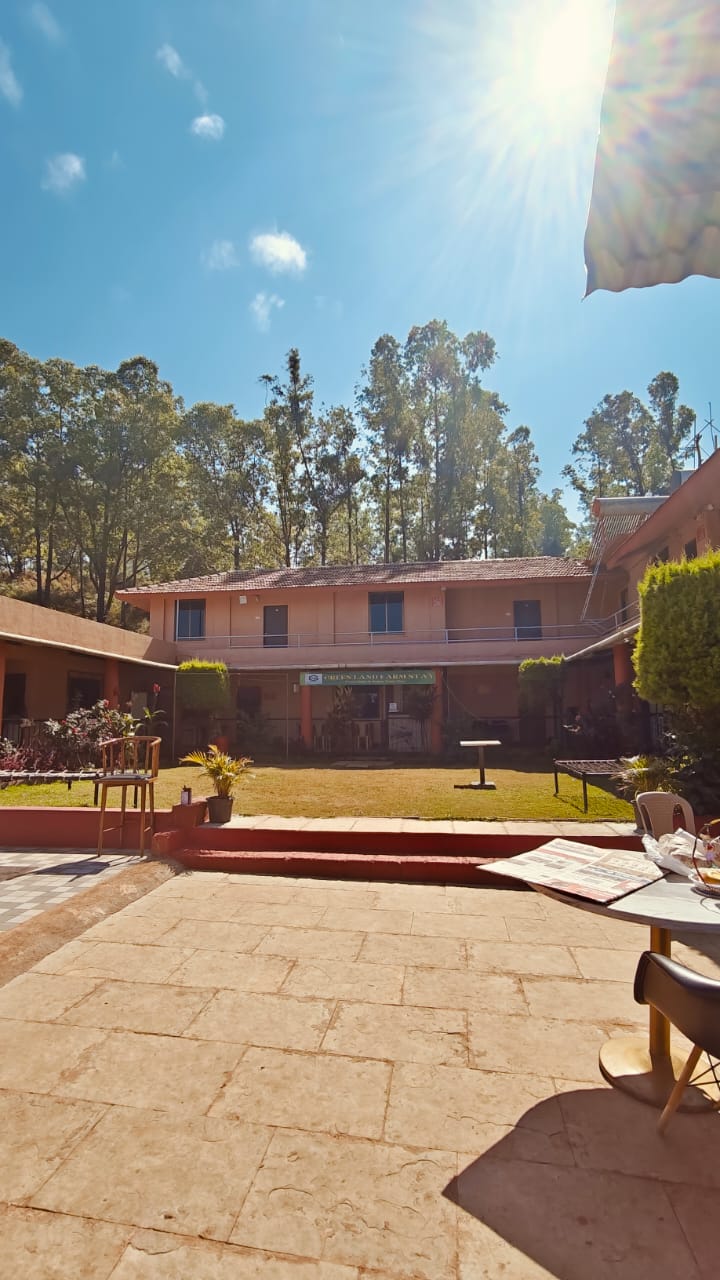
Greenland Stay Hotel and Resort, Panchgani (Pachgani), Mahabaleshwar

 It is often said that Mahabaleshwar is marathi manus Kullu Manali and ofcourse it is. Or it can be also said that Kullu Manali is North Indians Mahabaleshwar. All seasons the weather is soul soothing and the landscape of Sahyadris which meet at Mahabaleshwar is out of this world.

We visited for a family function. My brother in law works in Mahabaleshwar (i know how exotic it sounds). The function was organised at Greenland Stay Hotel and Resort, which is only 2 kms offset from the Panchgani-Mahabaleshwar Road and 5-6 kms away from Panchgani market. The location was bit offroad and small vehicles or sedan will have bit of struggle to reach the location, but it is motorable. The location is amazing with views of Sahyadris on the north side of Mahabaleshwar mountain. The fort Kamalgad view is breathtaking and you can enjoy the same sitting in lawns of the resort whole day. The resort has 18-20 rooms, some big some small. As we arrived early, we had the choice to choose the best room for us (early bird catches the worm), which was the corner room with windows on three sides, the overall view from the room was superb. The room size is spacious, ideal for 2 adults and one child. Resort has swimming pool with kids and adults section separate. But swimming pool in 15 degree celsius weather is not a good idea, but my 5 yr old daughter as usual didn't care about the temperature and dipped into the swimming pool. With her I also had to dip in for her safety and gossshhh!! the water was bone chilling. My daughter was enjoying like it was a temperature controlled pool.

The resort overlooks a large strawberry plantation on the north side which is controlled by the land owner of the resort. The hotel visitors are not welcome in the garden, which is Ok, but if someone is ready to pay then they shall allow. All around there are private properties where trespassing is not allowed, unfortunately while having evening walk I ventured into one and I was reprimanded. No issues, I found a way to reach the valley overlooking Dhom dam. The view from that point is why people come to Mahabaleshwar. The view of large water body between Mahabaleshwar and Kamalgad mountain is eye-soothing and the terraces of strawberry garden give them an extra premium touch.

There was dinner and bonfire in the evening. The hotel owner had arranged food from outside for 25-30 people of our group because they ddin't have a big kitchen and enough manpower to cook food for large groups. Food was really good, less oily and rightly spiced. Breakfast next morning was Misal pav and Upma, but I didn't have it due to my fast. Lunch before leaving the place was good like the Dinner. Overall experience of stay was good, the location is awesome as it is offroad from main tourist attractions, the environment is really peaceful for a quiet weekend stay. The service was slow as I think the hotel is newly constructed and the staff is ran by a small family, still they were doing their best. The most disappointing thing was about availability of hot water. They have only one solar water heater, the water of which is only sufficient for 15-20 people, after that people are left with heater to dip inside the bucket which is not at all safe. atleast they shall have geyser at a common location, if not in each and every room, I am ok with that, many would have made an issue on this problem. Hot water is very much required in such a cold place.


Food - 7/10

Rooms - 8/10

Service - 6/10 (due to hot water issue one point reduced)

Amenities - 5/10

Location - 9/10

Views - 10/10

Cleanliness - 8/10

Overall rating - 7/10 (Must visit)


Ashapura Snacks, Dhokali Naka, Thane West (Poha and Sabudana Khichdi)

Small eatery right at Dhokali Naka serving almost all popular breakfast dishes in Mumbai. You can get Poha, Upma, Misalpav, Medu wada, Idli, Dosa etc. I had breakfast of Poha and Sabudana Khichdi. Poha was average, the flavouring of classic Maharashtrian Poha was missing, the serving guy smeared the Poha with coconut chutney as I asked. After having Poha I was not satisfied, so ordered Sabudana Khichdi. Both for Poha and Khichdi, the quantity was good and satisfying.  Sabudana Khichdi was average too, but not bad, could have been better. Poha was at 35 Rs and Sabudana Khichdi at 50 Rs. For the quantity and taste price would have been 25 Rs and 35 Rs respectively, never mind.

Kanda Poha - 5/10

Sabudana Khichdi - 5/10

Ambience - 4/10


Friday, December 13, 2024

Vitthal Kamat Hotel, Khed Shivapur, Pune

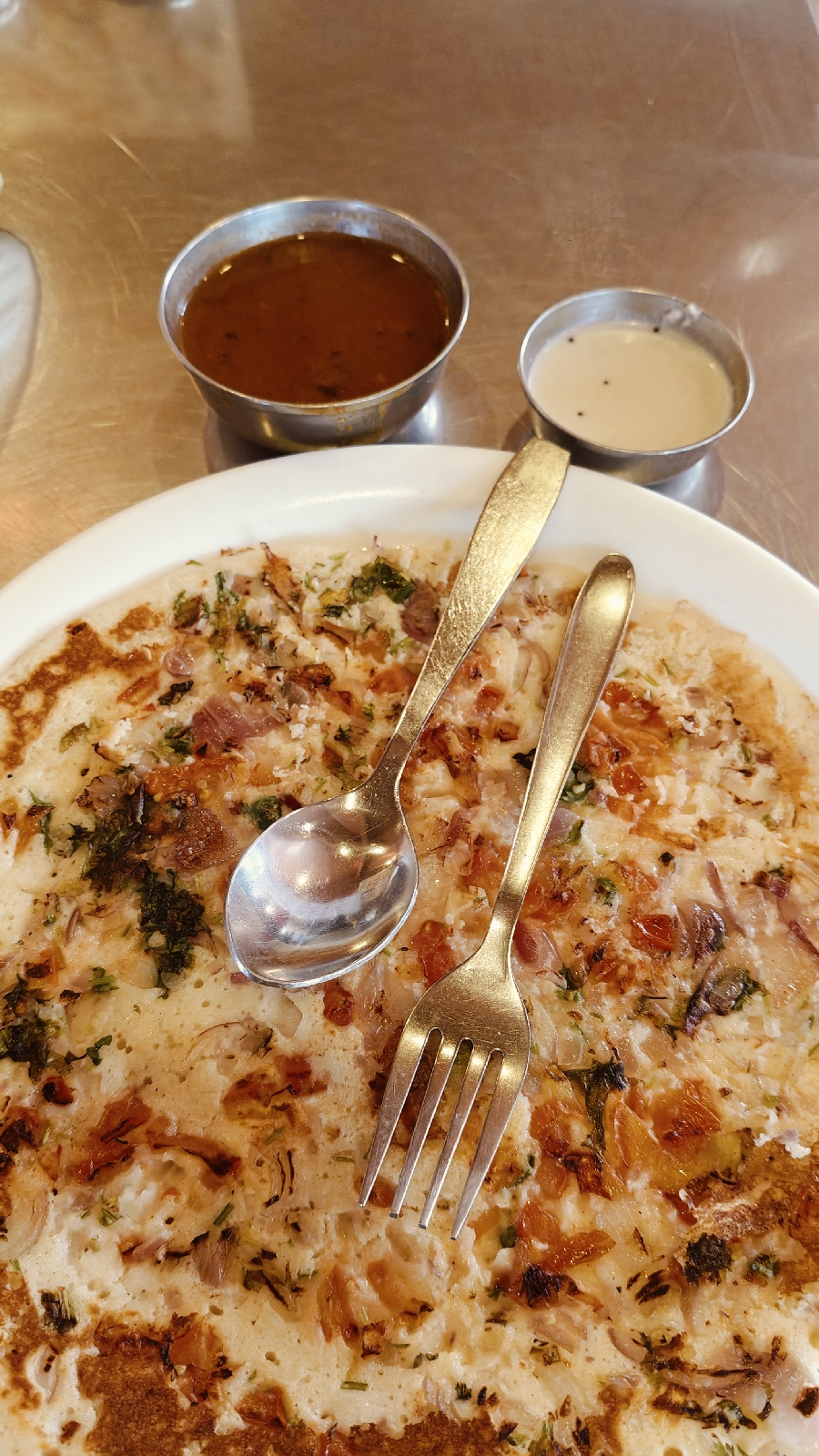
On the way to Mahabaleshwar this is popular spot for breakfast for Mumbai and Pune people. Parking is very spacious and restaurant too. Visited on Saturday morning, it was full packed and we struggled to find a table. Toilets are very clean. Ordered Tomato Onion Uttapam for myself and Masala Dosa for Wife. Masala dosa came first, huge size dosa with Yellow batata vegetable inside. Uttapam came 5 mins later, size was good for one person, not much thin not much thick crust. Uttapam in itself was good and adequately hot. My wife complained about Masala Dosa being cold. Chutney was huge disappointment for restaurant chain which boasts to be primarily South Indian food. Quantity and taste was not upto the mark. Quantity was very less personally for me, I was about to ask for an extra bowl (donno if bowl is right word for it), seeing that my wife gave away her chutney bowl to me, leaving me with the expression 'how can anyone not like coconut chutney'. Sambar was Okayish, made too sweet, but the consistency was good. After that had a south indian coffee, in no way it was south indian.

Tomato Onion Uttapam - 7/10
Chutney - 4/10
Sambar - 5/10
South Indian Coffee - 4/10


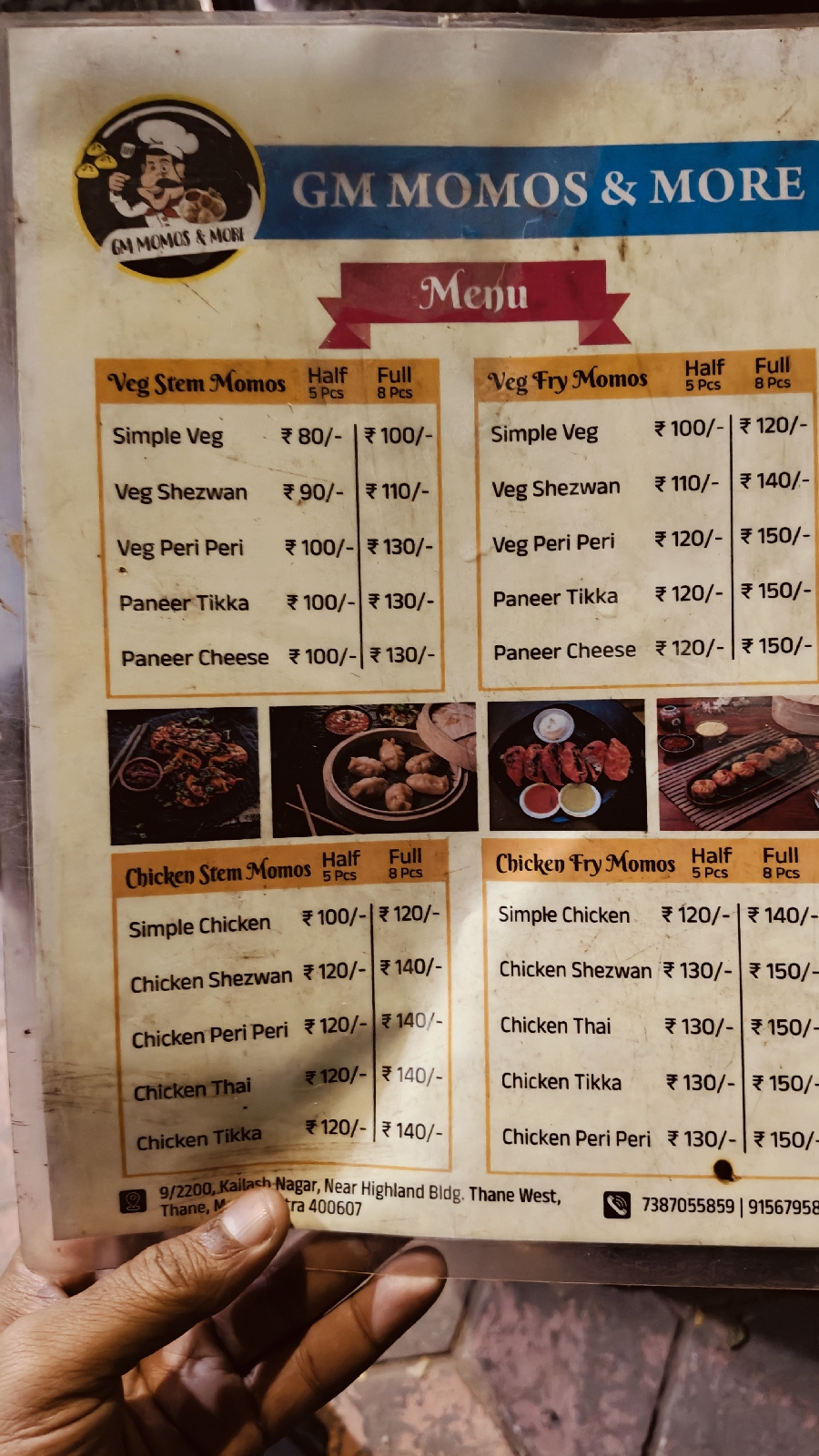
GM Momos & More, Dhokali

This is a food truck near Highland Gardens corner in Dhokali. Bought half plate steam chicken momos for 100 Rs. Momos were not good, will not recommend to anyone. The chicken inside hardly tasted like chicken. The mayo and schezwan was adulterated and watery. Please avoid this eatery

Steam chicken Momos - 3/10
Mayo and schezwan - 1/10

Wednesday, December 11, 2024

Paniyarapam (Appam) at Tamizhan T-Fun / Tamil Tiffin Dhokali Thane

A modest quiet restaurant opposite to Dmart in Dhokali. The ambience is simple and gives you a message of quick serve south Indian restaurant. Menu is all out South Indian, you will not be able to find any deviation to the other regional delicacies. I had Paniyarapam and Filter coffee. Paniyarapam had 6 pieces, good quantity ball, crunchy from outside and softy inside, was proof of the appam properly cooked. Appam were served smoking hot and I had to split them into two to get the steam out of them, in the process two fingers each hand got scalded. Two chutneys were served with same, White and Red (sounds like Wine), I asked for Sambar which is not part of the dish. White chutney consistency and taste was good, not too spicy and not too mild, it was perfectly going with the smoky hot appams. Red chutney had that good tanginess, but I dont like it personally very much. Sambar was disappointment for an all out South Indian restaurant, very far away from the Sambar at Mani's. You can easily identify the corn flour starch by the taste and shine in the sambar to make it thick, it is a big NO for me to add in Sambar, mostly roadside eateries add corn starch. Filter coffee was Okayish, it lacked the sharpness of classic south Indian filter coffee which gives you a high at the first sip. Overall experience was good for morning breakfast, the service was quick. The cutlery and plates were nice and authentic, like the ones you find in Hyderabad and Chennai Tiffins. The Menu spread covers Telangana, Andhra Pradesh, Tamil Nadu, Karnataka. Would definitely come back to try Pesarattu, which I have marked for next time.

Paniyarapam (Appam) - 8/10 (Must Try)
Filter Coffee - 5/10
Ambience - 6/10
Service - 7/10
Cleanliness - 7/10


Thursday, November 2, 2017

Chaulher-Dundha-Pimpla(Kandala) - Unexplored Baglan Forts

Until a week ago before actually going to these three forts, we were debating on options for our Trek plan on 28-29 Oct 2017. Options were Mangi-Tungi, Nhavigad, Chaulher, Pimpla, Bhilai, Premgiri, Rajdher, Indrai. After the required discussion, ifs and buts, we decided going to Chaulher, Pimpla, Bhilai, Premgiri. But two of our trekking friends Praveen Potdar and Sarvesh Tawade, who had earlier visited these forts, suggested that Bhilai fort is just a mountain and not much to see on the top after two hours of exhausting hike. We decided to cut Bhilai from our plan. For getting details on the route, I called Onkar Oak, who is an avid trekker and regularly writes travelogue in newspaper. Onkar said if you are leaving Bhilai, just because there is nothing to see on top, then Premgiri is also of same category. So, as per his suggestion, we decided to explore Dundha Fort and Mahadev Shilp Mandir in Deolane. The strange thing about going to trek is you plan too much and when you are actually on trek, all plans go for a toss. This is how our itinerary looked like on Friday 27th Oct 2017:-


Instead of leaving at 4 AM on 28th Nov, we left Thane at 5 AM (kyunki India mein koi time pe nahi nikalta). With my experience of our group and timing adjustments, I had already considered buffers in the departure and arrival timings. In the dark of morning, we 7 trekkers (4 guys and 3 girls) started our journey to Baglan region in Nashik by Maruti Ertiga. As we were reaching near Kasara Ghat, Sun god threw bright rays to paint the sky golden. We could feel the cold air and lukewarm sunrays hitting us at same time, to give a soothing effect. Before hitting Kasara Ghat, we had a Pee cum Potty cum Breakfast stop at Baba Da Dhaba. This Dhaba serves Hot Idlis, Medu Wada and Misal Pav from early morning. The best thing I like about this Dhaba is the way they serve Tea in glass cups,very rare we find in restaurants in Mumbai. Baba Da Dhaba location coordinates 19.6746402,73.4991751

By doing output and input exercise at Dhaba, we were back on Nashik Highway cruising at decent speed. As soon as you reach near Igatpuri, a group of forts welcome you on right side, Alang-Madan-Kulang-Kalsubai-Mordhan, standing high and handsome. On left Kavnai fort doesn't leave your sight till you pass Ghoti junction. Further Dangya Pinnacle pops up like an inverted nail.  It feels as if you have entered into an empire of forts and pinnacles. Group was as usual chirpy throughout the journey, pulling each other leg and bursting very very bad PJs.

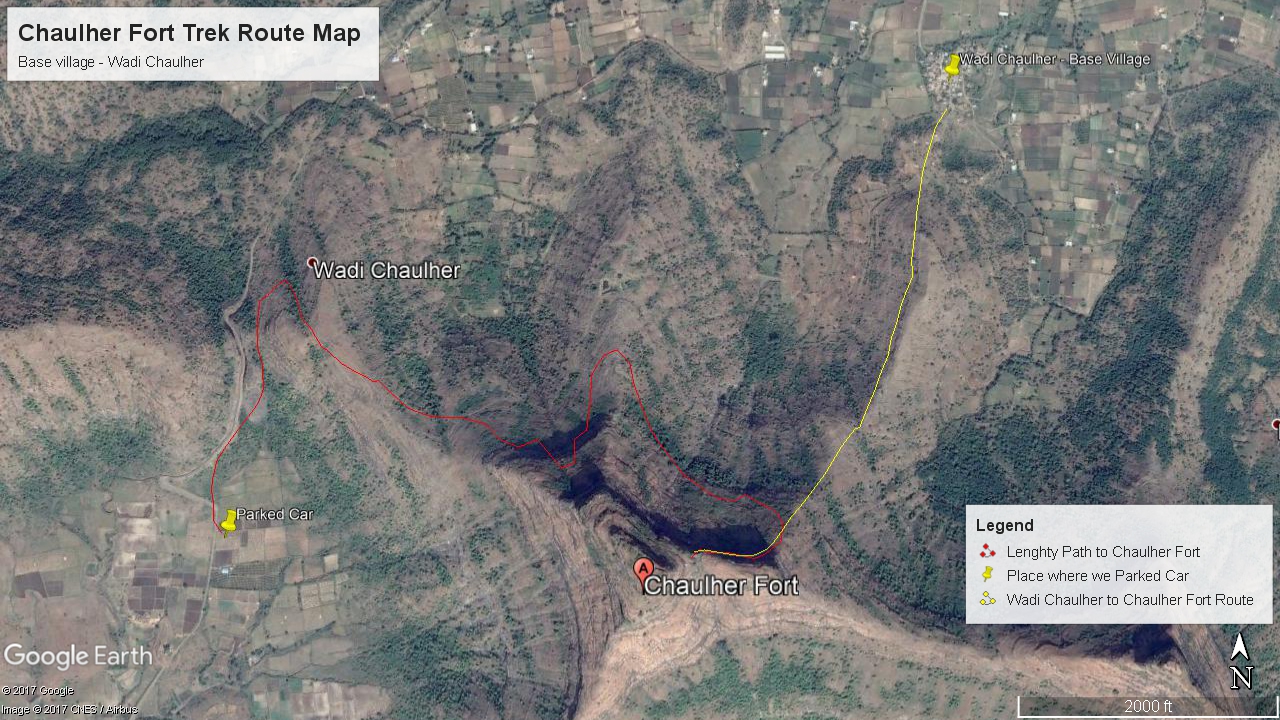
Moving on same highway you cross Nashik - Ozhar, again you see range of forts standing on left side, Saptashrungi, Rawlya, Jawlya, Markandeya, Dhodap, Kanchan Manchan, Koldher-Rajdher-Indrai and on the far north you can see Chandwad Fort. Just before Chandwad, you take a left towards Deola and your vehicle goes between Koldher and Kanchan-Manchan Forts. The whole ghat road is very picturesque, making you feel small in front of giant mountains. After reaching Deola, we made our first mistake of entirely relying on google maps to reach Wadi Chaulher. For reaching Chaulher Fort base village, Wadi Chaulher, you need to take route of Deola-Satana-Tilwan-Wadi Chaulher. Instead we took, Deola-Kalwan-Bhadwan-Visapur, as a consequence we reached a kuccha road on south side of Wadi Chaulher and in between stood mighty Chaulher fort mountain. Enroute, we asked villagers in Bhadwan about the route to Wadi - Chaulher. First of all, they were entirely clueless about existence of a village like Wadi Chaulher. Then they started to ask from where we are and if ladies are there in your group, then you shall not go in that region, as there are adivasi villages in the area. In two mins, the crowd grew from 2 to 15 people, they suggested to go from Chacher village, which we have never heard from the blogs and experiences of trekkers. I asked Avinash to press the pedal and take the vehicle as per google maps suggested. Further at Visapur also same response from the villagers, even though wadi chaulher was showing only 2 kms on GMaps. We continued on Gmaps route and reach kutcha road. Don't know when Google maps will become intelligent enough to show bad road and good road conditions in remote places. Below is the image of the route we took vs the route we shall have taken:-


We parked our vehicle at an unknown location and decided to directly get to the longer arm of the mountain on northwest side. We were pretty sure that the arm will take us to the door of the fort, but we were wrong again. We hiked the first ascend, which was full of scree, after reaching the plateau, we realised that there was big rock wall standing on the top of the arm, which was difficult to climb. Chaulher was laughing at us sitting on top, it started testing our endurance. Further on north side, we could see a ancient structure and a small water tank besides it. From that structure the northern arm of Chaulher fort started. We decided to traverse the mountain to reach there, it was a long walk but the constant breeze in the air helped to keep our bodies cool. As we reached the structure, we found a well trodden path making a traverse again and reaching to the center of the fort wall, where we could see the fort doors. This route was whole of thorns, bushes and all types of insects. Now we could see a clear and well trodden path coming from a village underneath the mountain, which was coming on the north eastern arm of the mountain with proper railings right to the top. Still we were not able to identify the Wadi Chaulher village. Let it be, we decided to move in the directions of fort door. It took us close to 2 hours to reach the fort door, by the route we took. Please find the google earth image below:-


Door has 3 forts for entry, excellent military strategy in case of attack on the fort. These doors are living example of brilliant architects who use to design impregnable forts. After going through the last door, you move up from the right side to the top of last door. From top, as you see down in the valley to the left of first door, you can find a beautiful hidden water tank with pure water. But the approach to that water tank we couldn't find, or one would need a rope to reach there from the first door. Further we moved towards left of the Citadel or BalleKilla, there is Hanuman idol and Chauranginath temple. Moving ahead to the temple, you can find water tanks on left Machi of the fort, water tanks are full of green moss. We came back to the last door and decided to explore the right side of citadel, as we couldn't find a way to the top from left side. There are three big tanks on the route, we tried to drink water from the first tank but it didn't taste good, water in rest two tanks was deep inside and no approach to go down. After you move ahead 30-40 steps from the last tank, you find steps cut in rock approaching towards the top of the fort. You will find a main door to the citadel and then two doors to the main structure on the citadel. As it was post monsoon season, grass was tall and thick, chaulher fort top was full of tall grass and thick bushes. Just 20 ft ahead, I saw a thin and long snake crawl into the bushes. Therefore, without wasting time we got down from the main citadel and made our way back through the 3 doors. Our descend started the same route as we came, because there was no option but to go back towards our car.

View of Chaulher Fort from the place we parked our Car

Walking the Long Long Long Traverse
First Door of Chaulher Fort


Fort Doors of Chaulher


Beautiful water tank hidden just above the first door
Steps going to the citadel

Fort Door and Remants on the Citadel

Water Tank on the plateau below the fort mountain

Slowly and steadily we descended the fort. I had the pleasure of taking dip in the small water tank enroute where village young boys were enjoying. I asked them name of the village by showing direction, they said 'Wadi Chaulher'. Atlast our suspense of location of Wadi Chaulher was broken. At that moment I decided to write this blog and guide future trekkers to the right direction. Wadi Chaulher is the base village from which trek is easy, you need to reach Satana-Tilwan-Wadi Chaulher, don't wander off like us. Negotiating scree patches, we descended to our car, had lunch besides road under a tree. Our next destination was calling, Dundha fort. It was already 4 PM, we were well behind our schedule, you can see the itinerary on the top.

Moving our vehicle in twists and turns, ups and downs we crossed Satana. Internal roads in Nashik are considerably good, even though it was post monsoon season. We first decided to explore Mahadev Shilp Mandir as our plan was to stay at base of Dundha fort, so even though we were late to reach base, we could explore the fort in morning. But the further story is very interesting. After Satana, taking help of GMaps, we reached Deolane around 4.45 PM and asked two bike-borne guys directions to Mahadev Shilp Mandir. They asked us to follow and in 5 mins through small but lively Deolane village, we reached Mahadev Shilp Temple (20.632571, 74.306736). The first view of Temple was amazing, though small, it resembled Mahadev Temple in Ambernath and Sinnar. Lot of fine carvings on the stone temple, seems to be made from a single rock. Some of the carvings resembled to carvings at Khajuraho, giving proof that India taught the world ways to make love. Inside the main foyer of the temple, Shiv Ling was residing silently. Beside the door of the foyer, there are idols of goddess carved in stone on both sides. People of Deolane have given paint to the top conical structures of the temple, due to which the temple has lost its natural touch, but appreciate their efforts to keep the temple standing and surroundings clean.

Mahadev Shilp Mandir, Deolane

Mahadev Shilp Mandir, Deolane

Mahadev Shilp Mandir, Deolane


Left Deolane around 5.15 PM, Sun god was feeling sleepy and going down at faster rate. We had to rush, but finding Dundha fort was a big challenge. We continued according to GMaps and again found ourselves on kutcha road. Again the same response by villagers, they didn't knew about a fort called Dundha but only new about village called Dundhe. We came back on the main road and reached Dundhe village(20.641090, 74.348816). Two people got down from the car, Prashant and Smita, to ask for directions to Dundha fort. Smita came with the right information but Prashant came with a strange one. The shopkeeper in Dundhe village told him that there are 4 tigers on the Dundha fort mountain and you shall avoid going there. Those tigers sometime come down to the base, sometime they are sitting in the temple and adjacent rooms. We were looking at each other face, the shopkeeper told us to take permission of the Baba taking care of the Dundheshwar Maharaj Mandir and then only hike the mountain as it is very dangerous. When we reach Dundheshwar Maharaj Mandir (20.619532, 74.344728) around 5.45 PM, Baba told us that they are not tigers but 4 leopard cubs (Biblyaa) on the mountain who are hardly One year old. And they don't disturb or attack anyone. Baba told us that without any fear you can go uphill, explore the fort and return as per your wish, there is no danger on the fort. Villagers are purposefully spreading such rumours. Meanwhile, we also asked Baba if we can stay in the temple premises for night. To which he said, you are most welcome, also you can cook food in my kitchen for the night. We started to climb the mountain, as it was getting dark, we took torches. Approach starts just behind the temple and in 15-20 mins, we were on the top of fort. Dundha fort mountain is full of heavy greenery and all types of huge trees, unlike other forts in Nashik, where you seldom find any big tree. We explored the Mahadev Mandir and potable water tanks besides them. Some miscreants had thrown plastic bags in the water tank. Dev Taaka, Bhim Taaka are name of the water tanks on the fort top built in rock. As we walked towards right side of the Mahadev temple, in 300 mtrs we come across a huge rock, from their the view of the surroundings was amazing. Our group spent around 30 mins sitting on the rock and enjoying the view as sun god went down to sleep completely. In dark, we made our way through bushes to the Mahadev Temple. Enroute we made jokes about what we will do if Leopard comes in our way. But, there was no sighting of leopard till we got down to the Dundeshwar Maharaj Mandir.

Left is the Dundha Fort Mountain

Dundheshwar Maharaj Mandir

Info on the fort at Base of Dundha Fort

Shiv Temple on Top of Dundha fort

Beautiful Shivling inside the Temple on Dundha Fort 


Baba in the mandir was kind enough to not only share his kitchen but also provide ingredients to make rice and tur dal aamti. Baba's house was just besides the mandir, but it was not like any ashram made of leaves or sticks, it was a proper RCC bungalow (G+1) with Dish TV. After Dinner, we said goodbye to the day in a big hall newly constructed in front of the temple.

Sunday morning was pleasant and the surroundings of Dundeshwar Mandir were looking beautiful in daylight. By 8 PM we completed our output exercise and rushed to Satana for input exercise. Satana was just waking up when we reached there at 8.30 PM. Pimpla fort was a good 40 kms from Satana, so we decided to have breakfast to our heart's content. Near to Satana ST stand there are multiple hotels were you can have a good breakfast in affordable prices. Our next destination was Malgaon, which is one of the three base villages of Pimpla Fort. We decided to reach 'Dangsaundane' and ask exact directions to Malgaon, as we had wandered off due to excess usage of GMaps the previous day. In rural areas, there is difference between how you read a place name and how it is pronounced locally. When we reach Dangsaundane, we were asking 'मळगांव', but there were empty expressions on the face of villagers, as if we asked about 'California'. By showing them google maps and the direction we intend to go, they finally said you are suppose to go to 'मळगा'. So, this is how they pronounced Malgaon. And ofcourse they didn't knew about Pimpla fort, no need to explain why.

So, there are three approach to Pimpla Fort, One from Sawarpada, second from Vathode and Third from Malgaon. First of all you shall know that local people call the fort mountain as 'Kandala' or 'कंडाला' . The approach from Sawarpada is regularly used by trekkers, but it is lengthy and to come to the base of the mountain, it takes 2 hours and further 1 hour. Almost same thing from Vathode village. Best is you start from Malgaon village, which is situated just under the eastern arm of the fort. We reached Malgaon around 10.30 PM. Malgaon village is not less than the picturesque villages you see in bollywood films. With mountains surroundings from all sides except from the east, the village is gorgeous with agriculture booming in the valley. Villagers were busy with harvesting season and didn't have much time to see who have arrived in the village. We asked for a guide, who could take us to the mountain top, so we could avoid wasting time. But everyone was busy and reluctant at same time.Even though Pimpla fort peak was visible from the village, we were not sure if we would find the right route. A farmer with his two bullocks was kind enough to guide us to the start of the trail, also showed us the direction we shall follow on the mountain to reach Kandala fort. We parked our car near a villager's house. Moving through fields of Bajri, Corn, Rice, Nagli, we reached a trail going upwards in the direction of fort.  A prominent trail starts from the road opposite to the earthern dam of Malgaon village. Google coordinates of starting point are 20.634878, 73.934737. 


You don't leave the well trodden trail till you reach the second plateau, in between you go through Nachni (Ragi/Nagli) fields. Further the trail was lost in tall and thick grass, we were on our own again. But as we had proper sense of direction, thanks to the farmer, we continued on the path entirely covered by grass. In approx 1 hr 15 mins, we were near the northern face of the Kandala fort. We could see the big cave, but the cynosure of Kandala fort is Nedha (hole in the fort wall), we were not able to locate yet. We hiked upto the three water tanks which were on left side of the cave, again the water didn't seem to be potable. Cave on the fort was also Nedha initially, but was closed on one side due to fallen rocks. Cave is big enough to accommodate 20 people, but the head space is very less, if somebody doesn't take care, he/she is ought to get injured. We had a good photography session in the cave. To locate Nedha, we opened information of the fort saved in our phone. We came to know that Nedha is just 30-40 steps ahead of cave in eastern direction. We rush to the spot and were awed by the natural wonder. It was a good 70-80 feet wide, 10-15 feet height hole in the mountain of Kandala fort. On the other side, it seemed like entry window to the planet earth. Again click click click, our photos and poses were not stopping. Just besides the Nedha, the mountain is divided into two parts, from there by easy rock climbing you can reach the left top, which has water tanks and amazing view of the surroundings. On the right top, there is not much to see, you can just go to the end and come back. Panaromic view of Baglan and rural Nashik is amazing from the fort. On northern side, towards Mah-Guj border, you can see the whole range of Salher-Salota-Mulher-Mora-Hargad. Just left to the Salher fort, there is Takara pinnacle looking dangerous but determined. On Southern side, you can see Dhodap and nearby forts. It was a clear day, we could see clearly till 70-80 kms in all directions.


Pimpla (Kandala) Fort from base village Malgaon

Path Lost in Grass

Entry to Planet Earth

Nedha on the fort

Pimpla/Kandala Fort

Malgaon earthern dam

Panorama view from Pimpla fort top


Spending a good one hour on the fort, we started to descend from the same path. We lost the way one time, but were on the right trail in few minutes. View of Malgaon earthern dam was amazing, it was inviting us to take a dip and then continue journey back to Mumbai. But we were running out of time, as there was around 6 hours of journey back home. We returned near our Car around 2 PM, ate all the fruits we had and via Kalwan-Deola-Chandwad, we reached Mumbai highway. We would have avoided 20 kms if we went via Vani, but as Avinash said the road condition is bad, we decided to move via Deola. By taking two small breaks, we reached Thane around 8.30 PM and there were goodbyes and promises to meet again. We were half n hour early than what I planned in the itinerary, Bravo, Kudos !! Lot of thanks to our group Mahesh Gavasane, Smita Gavasane, Avinash Jadhav, Samidha Jadhav, Prashant Salunke, Arpita Gavankar & Anurag Chivilkar.


Gadhegals and Veerghals Enroute during Trek